Dump Trailer vs. Dumpster Rental in San Diego: What's the Difference?
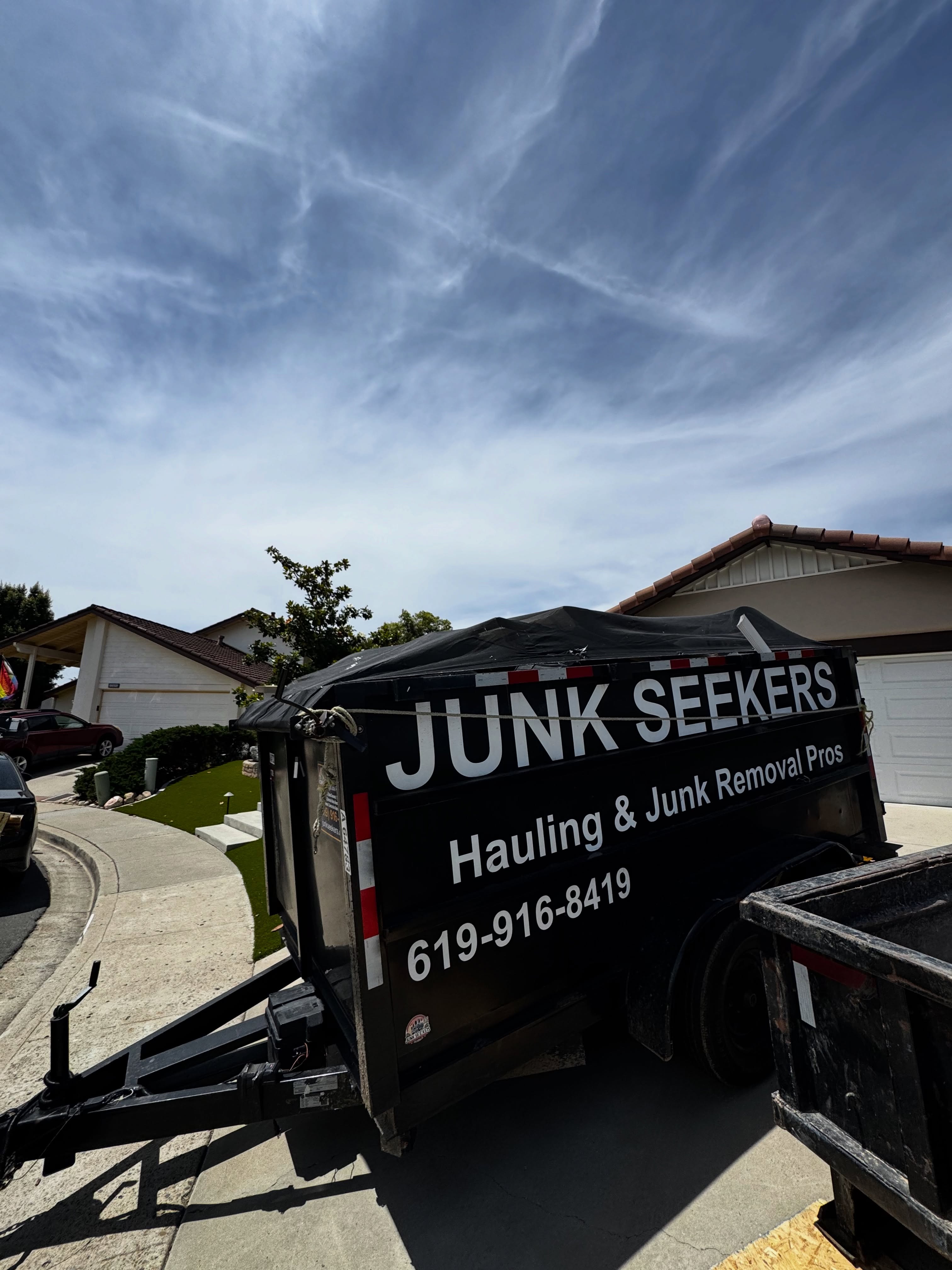
Both dump trailers and traditional roll-off dumpsters give you a container to load during a cleanup or construction project, but the equipment and placement can differ. Junk Seekers' construction debris trailer is a customer-loaded trailer: we deliver it, you load accepted debris, and we return to haul it away.
Key Takeaways
- • Both dump trailers and roll-off dumpsters are generally customer-loaded - the customer loads the container during the rental period
- • Junk Seekers delivers and retrieves its construction debris trailer - you load the accepted debris, we haul it away
- • Full-service debris removal is available if you would rather have the Junk Seekers crew load and haul accepted debris for you
- • Placement requirements vary by property, street and local jurisdiction - check applicable local requirements before delivery if a container would sit in a public right-of-way
- • Heavy or specialized materials should be confirmed before loading - including concrete or dirt
Both dump trailers and traditional roll-off dumpsters give you a container to load during a cleanup or construction project, but the equipment and placement can differ. Junk Seekers' construction debris trailer is a customer-loaded trailer: we deliver it, you load accepted debris, and we return to haul it away. Traditional roll-off dumpsters are generally larger containers delivered by a dumpster provider and also typically loaded by the customer.
Neither option is universally better. The right fit depends on your project, the amount of debris, available space, and whether you want to load a container yourself or have a crew handle it.
What is the difference between a dump trailer and a dumpster?
A dump trailer is a towable trailer delivered and retrieved using a vehicle. A traditional roll-off dumpster is a container delivered and picked up using roll-off equipment. Both are generally loaded by the customer during the rental period.
With a Junk Seekers construction debris trailer, the customer loads the accepted debris. Junk Seekers handles delivery and haul-away. If you would rather have the crew load everything for you, that is a separate full-service service - see our full-service debris removal.
How does a Junk Seekers construction debris trailer work?
The customer-loaded workflow has three stages:
- Delivery. Junk Seekers delivers the trailer to the approved location.
- You load. You load accepted construction and remodeling debris into the trailer during your project.
- Pickup and haul-away. When the trailer is ready, contact Junk Seekers. We return for the trailer and haul the accepted material away.
The customer loads the trailer. Junk Seekers does not load the trailer for this service.
How does a traditional roll-off dumpster work?
A dumpster provider delivers a roll-off container to your location. The customer generally loads the container during the rental period. When the rental is done, the provider retrieves the container. The provider, equipment, container size, and placement considerations may differ from a towable trailer.
Who loads the debris?
For both a Junk Seekers construction debris trailer and a traditional roll-off dumpster, the customer generally loads the container. If you do not want to load the debris yourself, Junk Seekers offers full-service debris removal where the crew loads and hauls accepted debris for you.
Where can the container or trailer be placed?
Placement rules can vary by property, street and local jurisdiction. If a container or trailer would be placed in a public right-of-way, check the applicable local requirements before delivery. Junk Seekers uses a rubber-tired construction debris trailer. The appropriate placement depends on the property, access and project.
Comparing your three options
Here is how a Junk Seekers construction debris trailer, a traditional roll-off dumpster, and full-service debris removal compare:
| Factor | Junk Seekers Debris Trailer | Roll-Off Dumpster | Full-Service Debris Removal |
|---|---|---|---|
| Loading | Customer | Customer | Junk Seekers crew |
| Equipment | Towable dump trailer | Roll-off container | Crew and hauling equipment |
| Placement | Rubber-tired trailer; depends on property | Roll-off equipment; depends on site access | Crew comes to the removal area |
| Project duration | Loaded over the rental period | Loaded over the rental period | Completed during the service visit |
| Pickup | Junk Seekers retrieves trailer | Provider retrieves container | Crew loads and hauls during service |
| Best suited for | Ongoing remodels where you load over time | Large projects with high debris volume | Debris already collected; you want crew loading |
Which option works better for different project types?
No single option is universally better. Here is how the scenarios tend to break down:
- Ongoing remodel. A customer-loaded container may make sense when debris accumulates over several stages of a project.
- One-time pile ready to go. Full-service debris removal may make sense when debris is already collected and you want a crew to load it.
- Space and access considerations. Equipment placement depends on property layout, access and provider requirements.
- Larger project. A traditional roll-off dumpster may be considered depending on project volume, site access and provider options.
What if you don't want to load the debris yourself?
If you would rather not load a container yourself, Junk Seekers also offers full-service debris removal. With that service, the Junk Seekers crew loads and hauls accepted debris for you. If you are deciding between having a crew load everything versus loading a container yourself, you can also read our junk removal vs dumpster rental guide.
How much does a dump trailer or dumpster cost?
Cost can depend on factors such as the provider, the container or trailer arrangement, project duration, material type, the amount of debris, and disposal requirements. For current Junk Seekers pricing information, see the pricing page.
What should you check before scheduling?
Before scheduling any container or trailer, confirm the material you plan to load, the approximate amount, and where the equipment will be placed. Heavy or specialized materials, including concrete or dirt, should be confirmed with Junk Seekers before loading. If the container or trailer would sit in a public right-of-way, check the applicable local requirements first.
To explore the customer-loaded trailer option, see our construction debris trailer rental page.
Frequently Asked Questions
Need a Construction Debris Trailer?
Tell us about your project, the debris you expect to load and where the trailer will be placed. Junk Seekers can help determine whether the customer-loaded trailer is a fit for your project. Call (619) 916-8419 or book online.
See Trailer RentalBook Online